An interesting thing happens when you spend a long time reading the diaries and letters and scrapbooks of long-dead individuals: you might have started out interested in one person in particular, but you come out the other end wishing you could speak to, or even be friends with, someone else entirely—some obscure historical personage who you never would have known of, nor cared at all about, if not for this chance encounter.
That’s how I first met Fanny Cohen. Some time ago I was doing a late-night trawl of various digital archives when I came across a record in the University of Sydney:
“Item 4: copy negatives (2 film rolls); the original album is not held by the Archives (? copied in October 1975 with Item 5); contains photographs and handwritten captions and entries by Frank Debenham, Raymond Priestley and other participants on a Geology camp/excursion in the Hunter Valley in 1910.”
I think I must have searched “Frank Debenham” to land there (likely thing for me to do). At the time the item was not digitized so I emailed Sydney’s archive asking for scans of the pages “depicting/contributed by Debenham and Priestley” as I put it.
To my delight I received two pages from the geology camp scrapbook, depicting “Hope” (Deb) and “Carlo” (Priestley). The pages were scrawled over with in-jokes, song lyrics, doodles: the camps, full of young university students, must have been something like a modern-day summer abroad program or a spring break excursion.
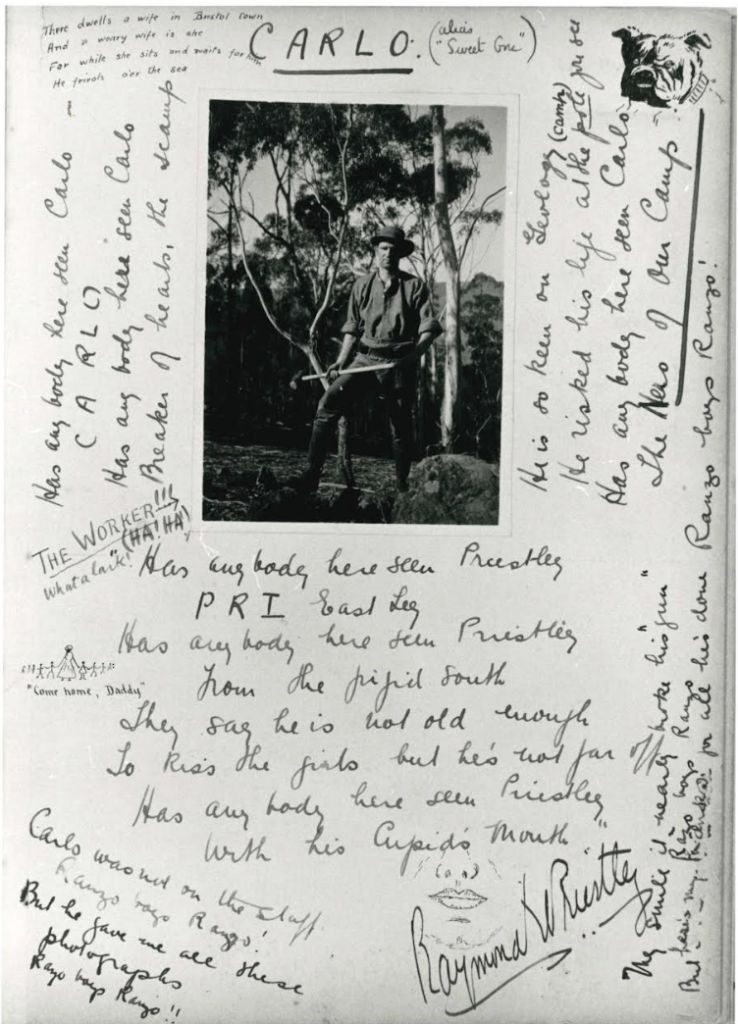
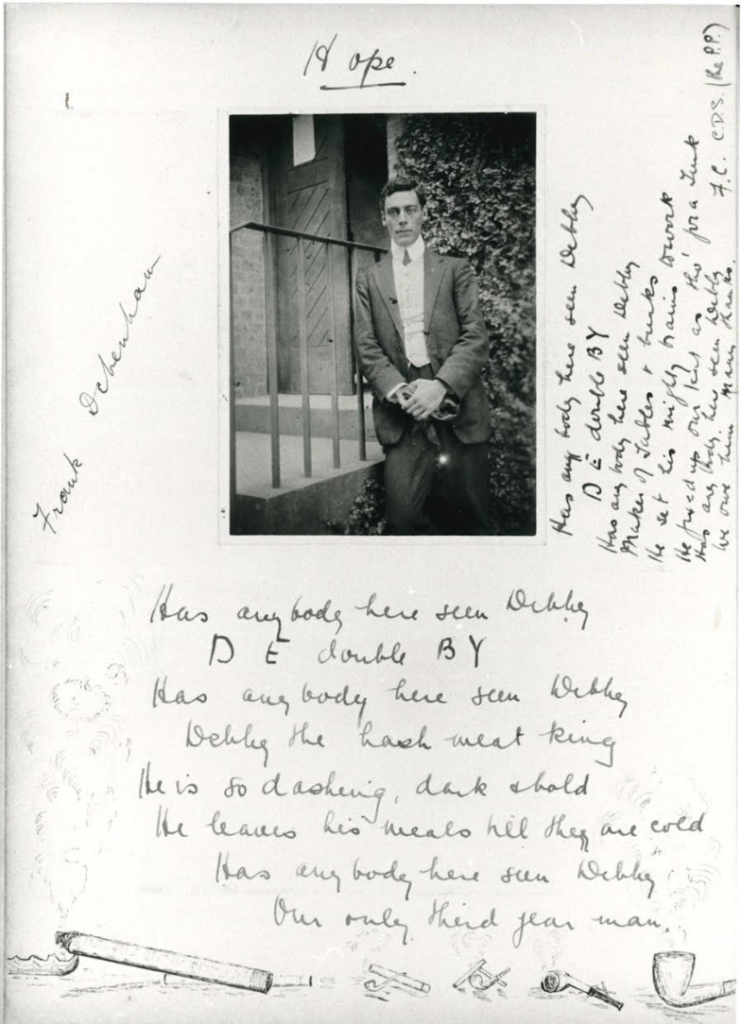
Armed with adequate biographical background detail about the two lads in question, I felt I was at least partially in on the jokes:
“They say he is not old enough / to kiss the girls but he’s not far off / Has anybody here seen Priestley / with his Cupid’s mouth”
This is funny because the young Priestley, before he left on the Nimrod expedition in 1909, was brought up in a sheltered Methodist family, and even after being “broken in” in Antarctica seems to still have been giving off a distinctly virginal air.
“He is so dashing dark and bold / he leaves his meals till they are cold / Has anybody here seen Debby / Our only third year man”
This is funny because even on the Terra Nova expedition (still in the future when this was written) Deb was roundly mocked by his sledgemates for having to cool his hot hoosh in the snow, and even then taking forever to finish it. The drawings of pipes and cigarettes, decorating the page, I recognized as A) being Deb’s handiwork and B) a reference to his own chainsmoking tendencies, very much to the fore on the expedition as well.
The scrapbook was from the collection of one Fanny Cohen—and this obviously interested me. A Jewish woman! Clearly she had known Deb and Priestley, and been at this delightful geology camp with them, which was very exciting. But beyond what general detail I could find about her life online, there was nothing else to go on regarding her association with the Antarctics—nor any pictures of her as she might have looked at the 1910 camp.
My interest in Fanny was piqued further when I visited the Scott Polar Research Institute in May of 2024 and read previously unseen sections of Debenham’s diary.
On June 19th, 1911, in the depths of Antarctic winter, he wrote:
At work all day examining and labelling specimens. It is a curious tho’ well known fact that specimens generally look much better in the field than when in hand specimens at home. Still I think I have got a very good variety tho’ they are augite (not aegirine) xtals which I got from Observation Hill which were not obtained by Ferrar. Some of them are very perfect and I am forced to wonder whether Miss Cohen B.H. B.Sc. Lecturer in Crystallography at the University of Sydney will take as much trouble over them as she did over Thomson’s xtals from here.
“Thomson” was J. Allan Thomson, a New Zealander and a Rhodes Scholar who had been originally hired as geologist by Scott but was unable to go on the expedition due to a diagnosis of tuberculosis. He had presumably been assisting Professor “Prof” T. W. Edgeworth “Tweddy” David on analyzing Antarctic rock samples from the Nimrod expedition. I couldn’t quite get my head around Deb’s tone here when I first transcribed this passage… but that would change…
In February of this year my friend Branwell alerted me that an entire geology camp scrapbook had recently been digitized and was available on the University of Sydney archive website. We had hit the motherlode of Fanny content—in addition to a large vein of Deb, Priestley, and their geology friends.
The Prof was known for running large-scale student geological excursions—kind of like student science summer camps. He was also known for being the first professor to hire women as academic staff at the University of Sydney. Fanny was hired as the second-ever female junior demonstrator (roughly equivalent to a TA) in 1909, paid the same amount as equivalent male staff. In 1910 she was a main player in a friendly co-ed clique of graduate student staff during a heavily documented geology camp at Pokolbin in the Hunter Valley region.
Thanks to the incredibly speedy and nimble (and FREE) digitization staff at Sydney, we were soon in possession of nearly the entirety of the photography in Fanny’s collection—in addition to the album Branwell had first found, which had been put together by another member of the clique, Arthur B. Walkom, known as “Walky.”

Professor David was apparently not present at the camp. This page in Fanny’s scrapbook with art by Deb references the Prof’s adventure on the Nimrod expedition.
Much like on an Antarctic expedition, everyone was given nicknames. Deb was “Hope” (part of a trio with “Faith” and “Charity,” Andrew D. Watson and Edward A. Briggs respectively), Dr. Charles Anderson was “Ranzo” (a reference to the sea shanty), Priestley was “Carlo,” Catherine D. Smith was “Bright Eyes,” and Fanny Cohen was “Minnehaha” — the name of the love interest in Longfellow’s Song of Hiawatha, and also possibly a reference to Fanny’s loud and recognizable laugh.
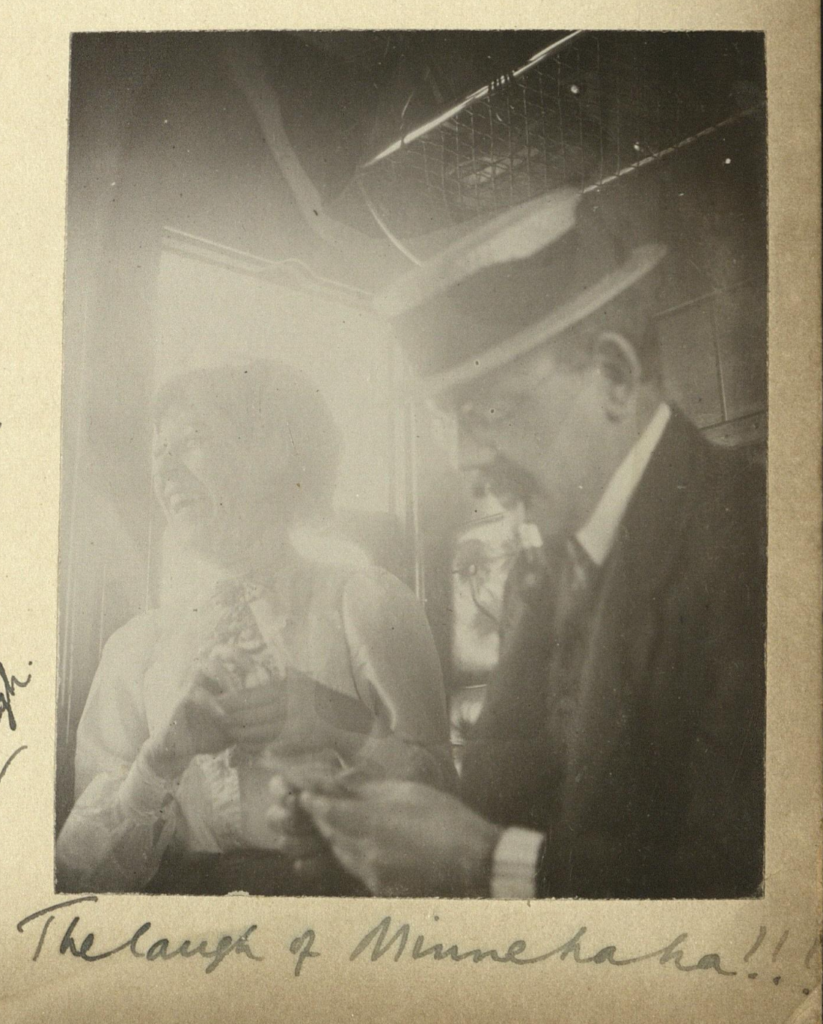
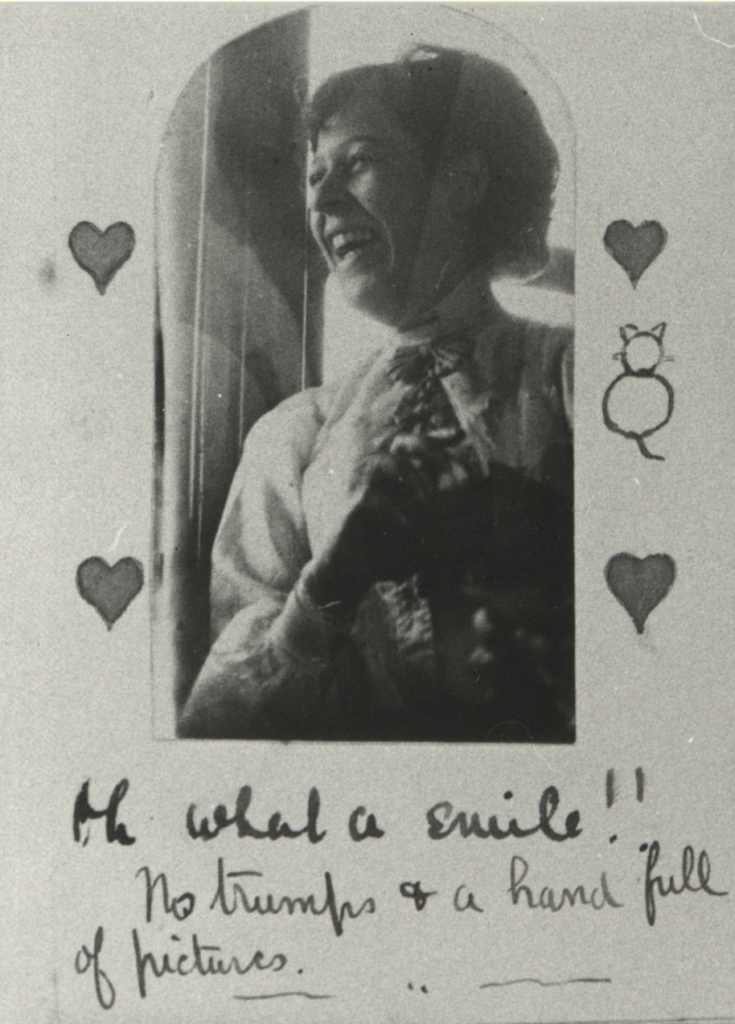
Left version from Walkom’s scrapbook, right from Fanny’s own — unclear who has drawn the captions/hearts/cat.
The students and researchers spent their week in the wild surveying with plane-tables, examining rock faces, collecting samples, and practicing their sketching. At night they would gather around the campfire and make up parodies of popular songs of the day, which were all extensively recorded in the scrapbooks in the Sydney collection.
Many campers were recipients of personalized verses of “Has Anybody Here Seen Kelly,” popularized by Florrie Forde in 1908—as seen above with Deb and Priestley.
Fanny’s verses went thusly:
Has anybody here seen Fanny
F A double N Y
Has anybody here seen Fanny
Has she passed this way
She comes up here the rocks to name
But has a good time just the same
Has anybody here seen Fanny
We haven’t but we may
Has anybody here seen Fanny
F A double N Y
Has anybody here seen Fanny
Don’t you love her smile
She’s a regular sporto
No doubt she’ll soon be caught-o
Has anybody here seen Fanny
Cohen for a little while
She and fellow grad student Catherine Drummond Smith were referred to collectively as the P.P. (variously: Pampered Pair, Perfect Pests, Pilfering Pirates) and they both appear frequently in the scrapbooks.
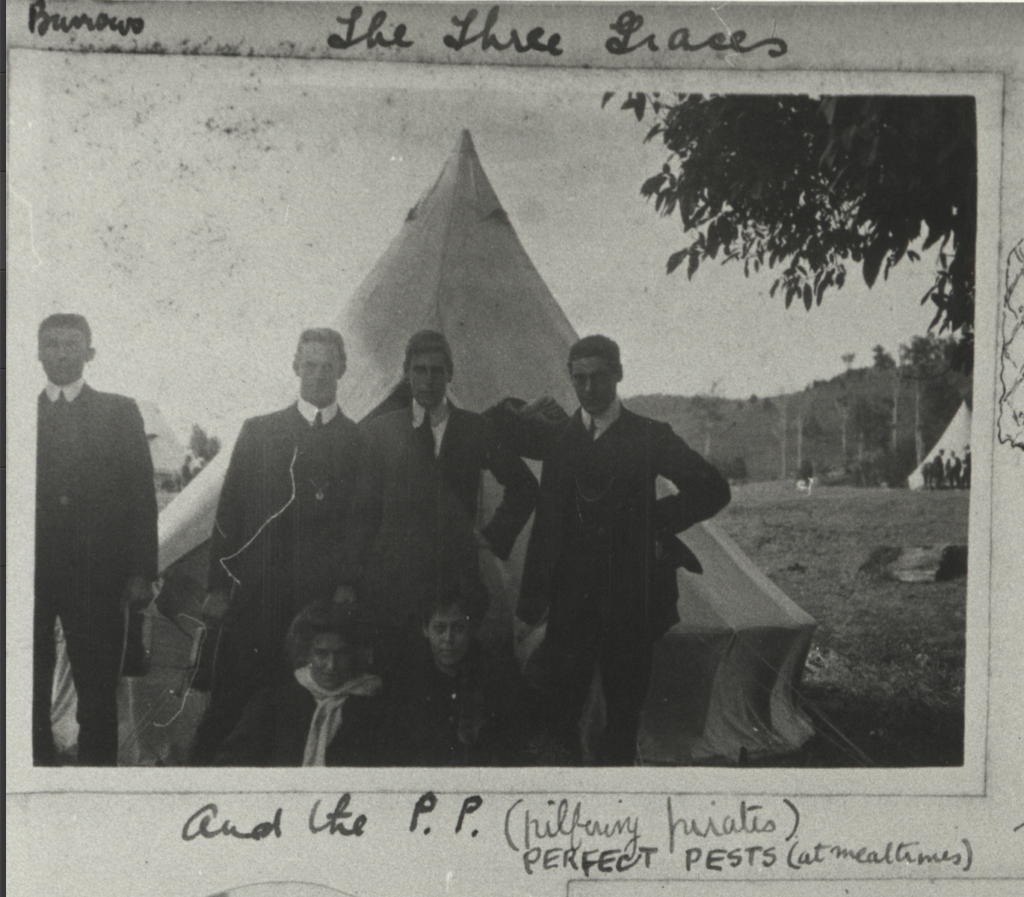
Deb (Hope) with Faith and Charity (the three graces) and the P.P.
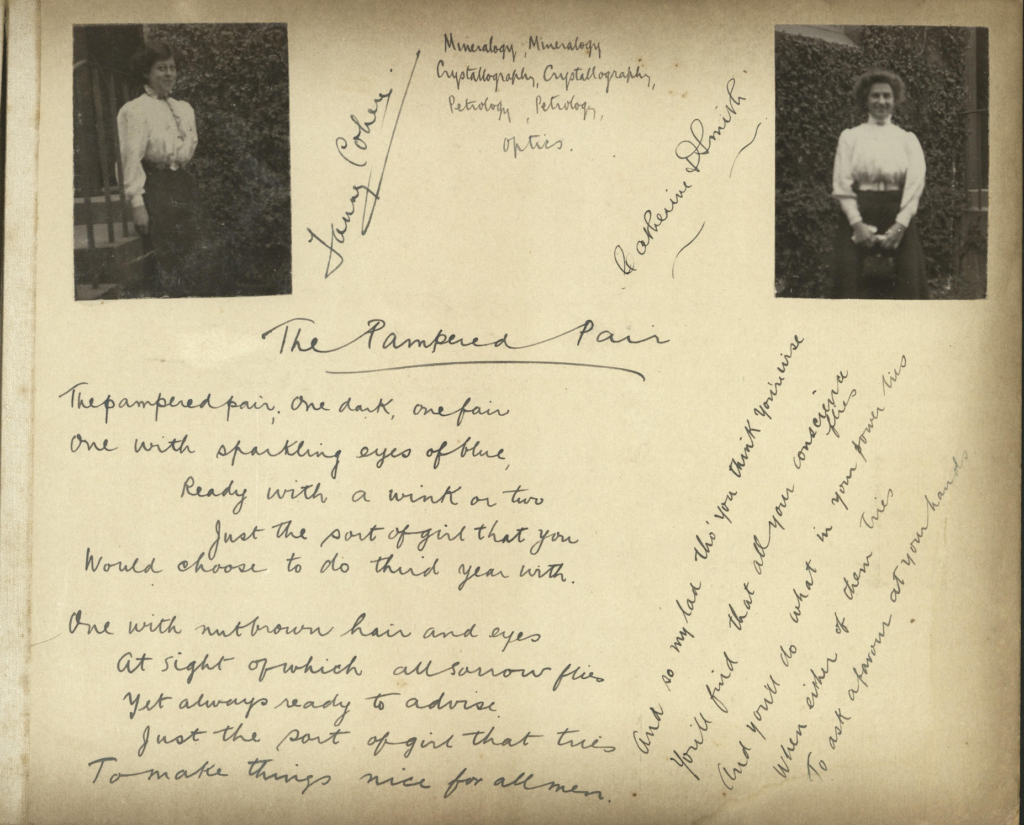
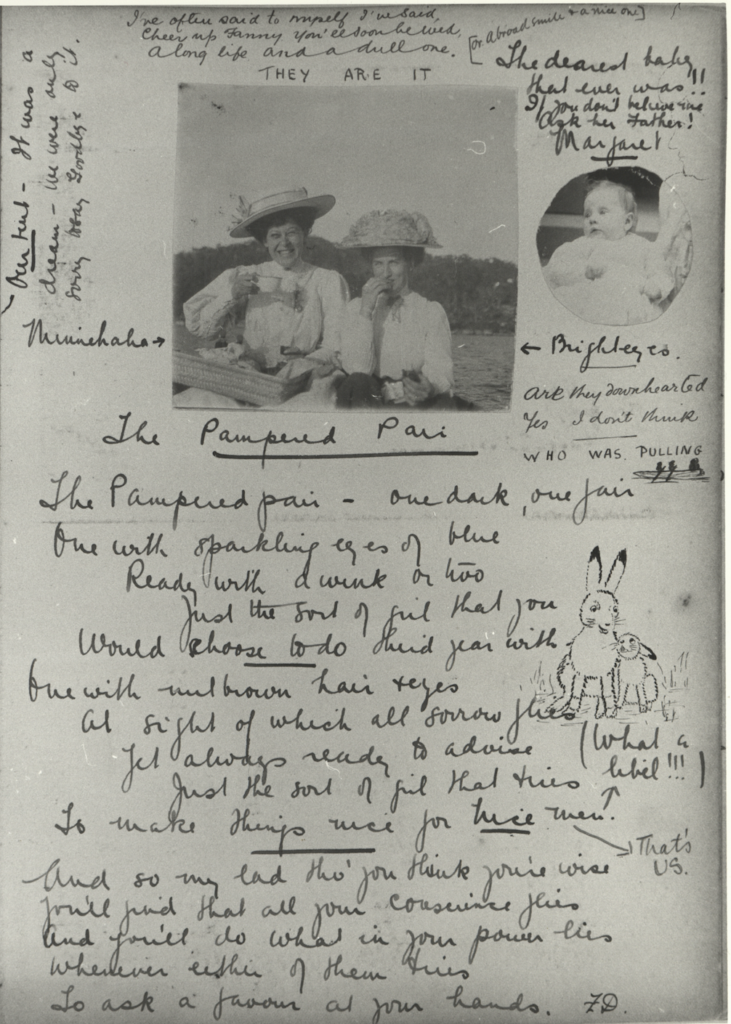
“Pampered Pair” verses about Fanny and Catherine — signed F.D. (Frank Debenham) on the version in Fanny’s scrapbook, and the illustration is by him too
plus:
I’ve often said to myself I’ve said
Cheer up Fanny you’ll soon be wed
A long life and a dull one
[Or: a broad smile and a nice one]
Fanny was perhaps a bit of a flirt, and based on these poems/parodies, certainly looked upon as a catch—it was taken as a given that she would marry.
Geologist J. Allan Thomson was married, and Fanny’s scrapbook features pictures of his newborn daughter Margaret (who grew up to be a renowned New Zealand filmmaker). Yet Thomson himself wrote a few verses about Fanny which come off as rather flirtatious.
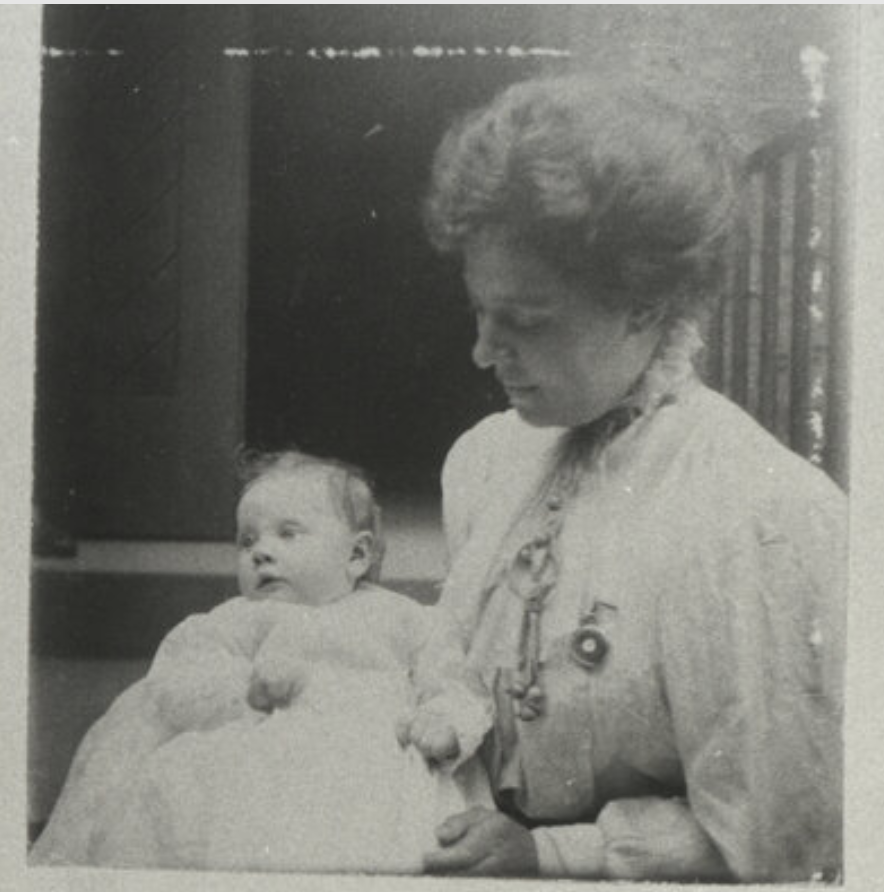
Fanny and Margaret

Song parody re: Fanny on the left, Catherine on the right
These are attributed to Thomson in Fanny’s book, but this scan is from Walkom’s book
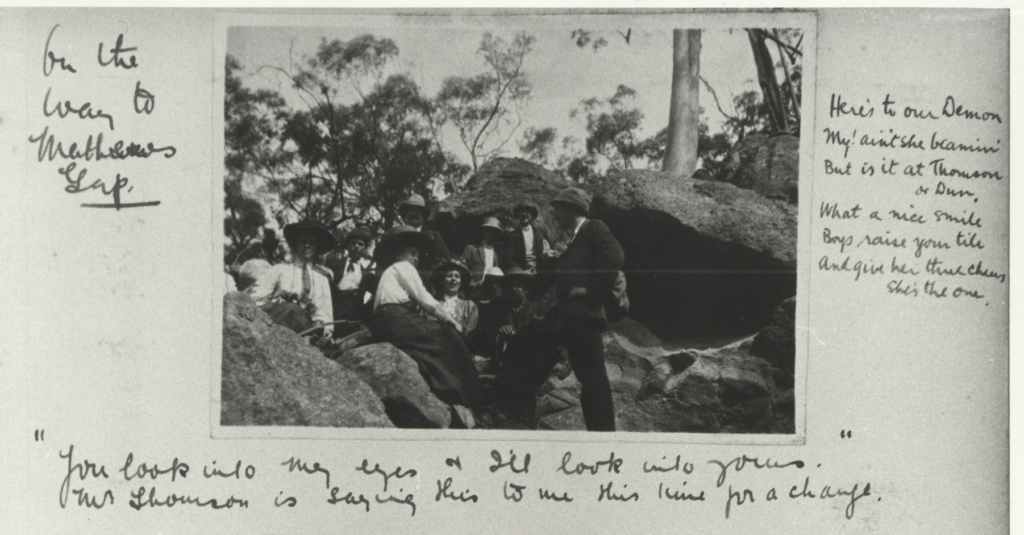
Song (unattributed):
Here’s to our Demon
My! Ain’t she beamin’
But is it at Thomson or Dun
What a nice smile
Boys raise your tile
And give her three cheers
she’s the one
*(Demon = Demonstrator)
Fanny’s caption below:
“You look into my eyes & I’ll look into yours.”
Mr. Thomson is saying this to me this time for a change.
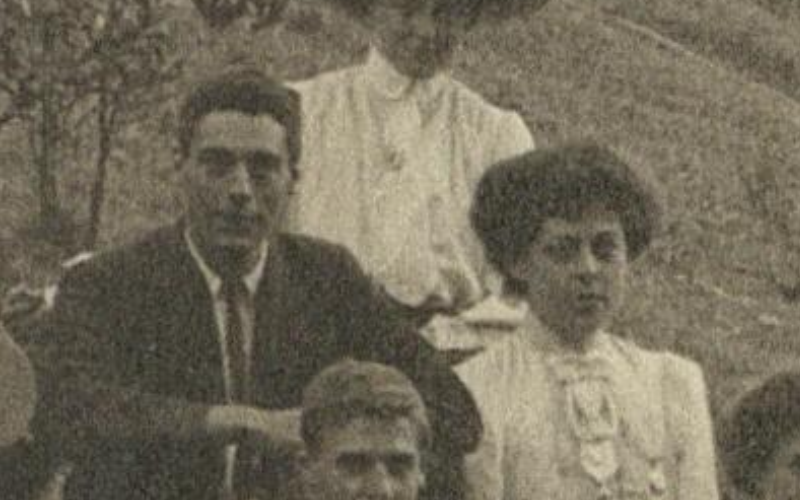
It seems that Deb also liked Fanny very much—his one reference to her in his diary, where she’d never see it, and where he could safely assume nobody who’d read it in the future would know who he was talking about, seems to be that of envy of her attentions towards Thomson (or rather his rocks, but these are geologists we’re talking about so same thing).
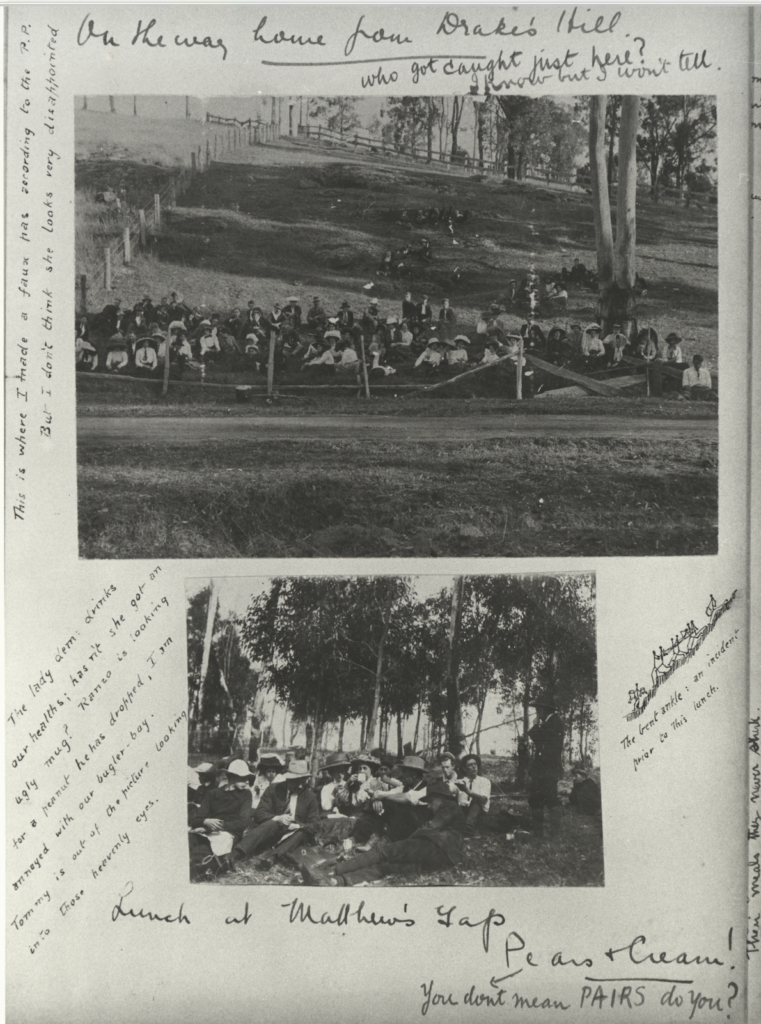
Decoding 100-year-old in-jokes is fun. Deb on the left refers to a faux pas he committed against the P.P., and below it refers to Fanny’s “ugly mug” — a double entendre re: the mug she’s holding and protesting too much about how pretty she is, I daresay.
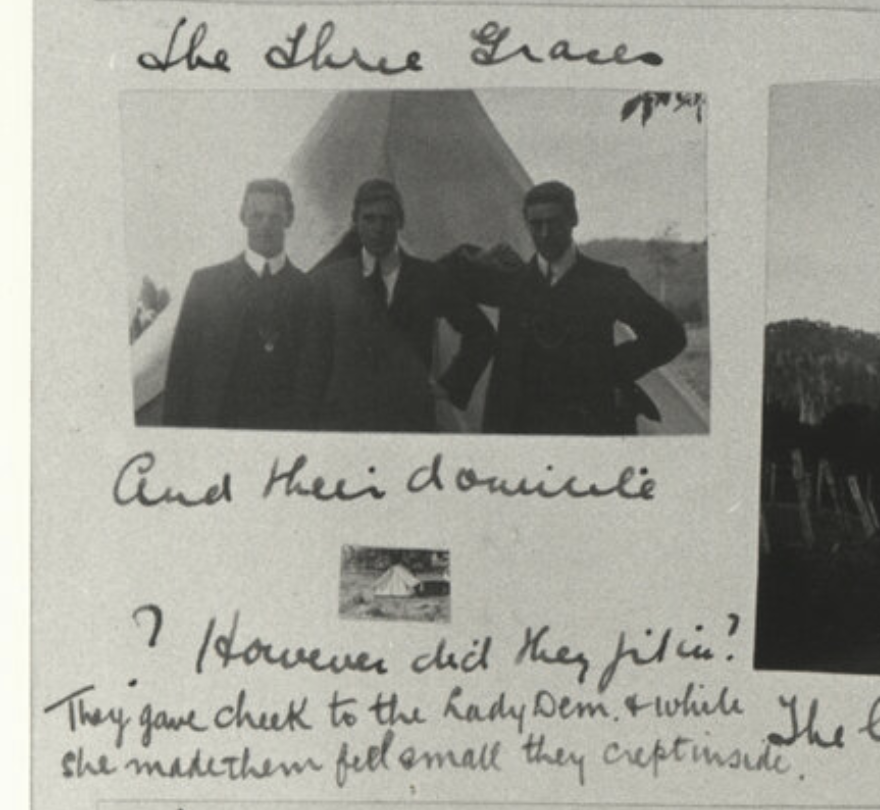
The Three Graces and their domicile
However did they fit inside?
They gave cheek to the Lady Dem. & while she made them feel small they crept inside.
Deb wrote “The Raison D’etre” above Fanny’s portrait in her scrapbook, and has a few poems referring to her as “The Lady Dem” with a sense of awe…
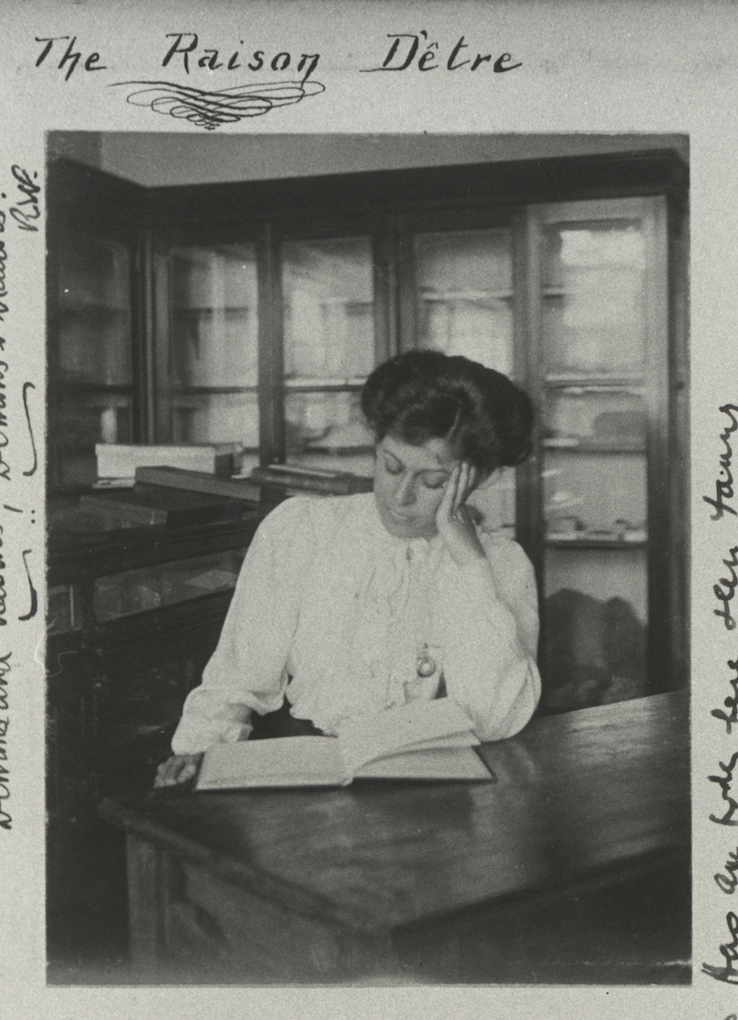
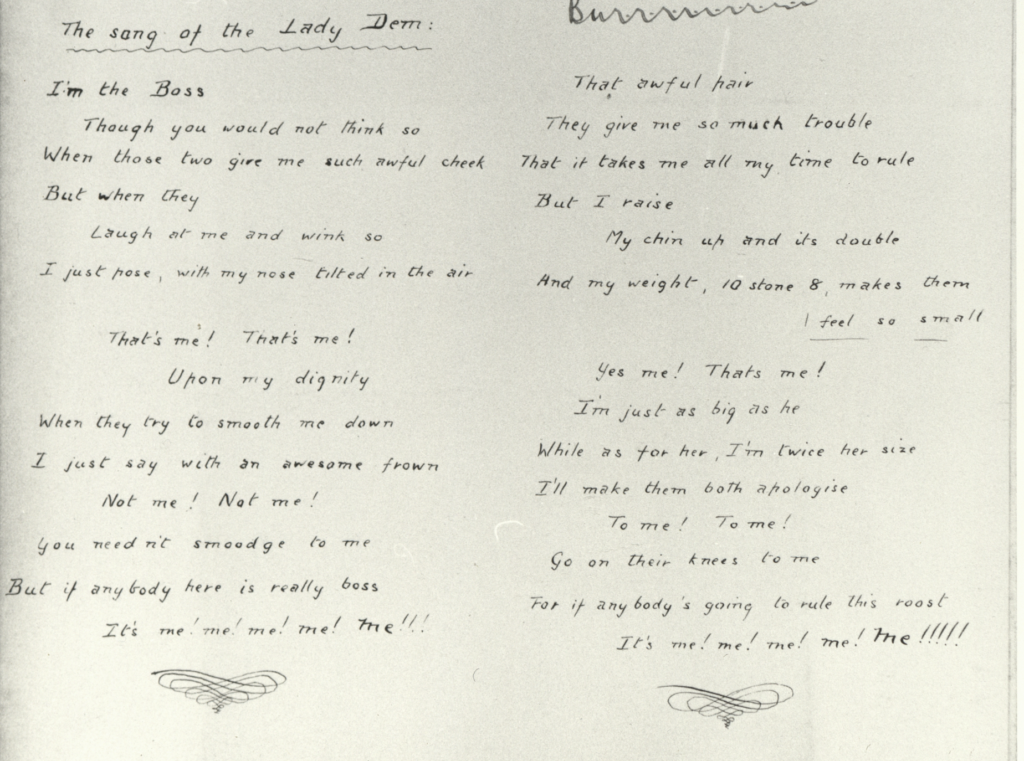
This poem in Deb’s handwriting about Fanny seems to be mocking her imposing nature and her weight (10 stone 8 pounds is 148 lbs, but fwiw she was noted to be tall).
She must not have been all too offended if she let him write it in her scrapbook.
I think he went in for big bossy girls…
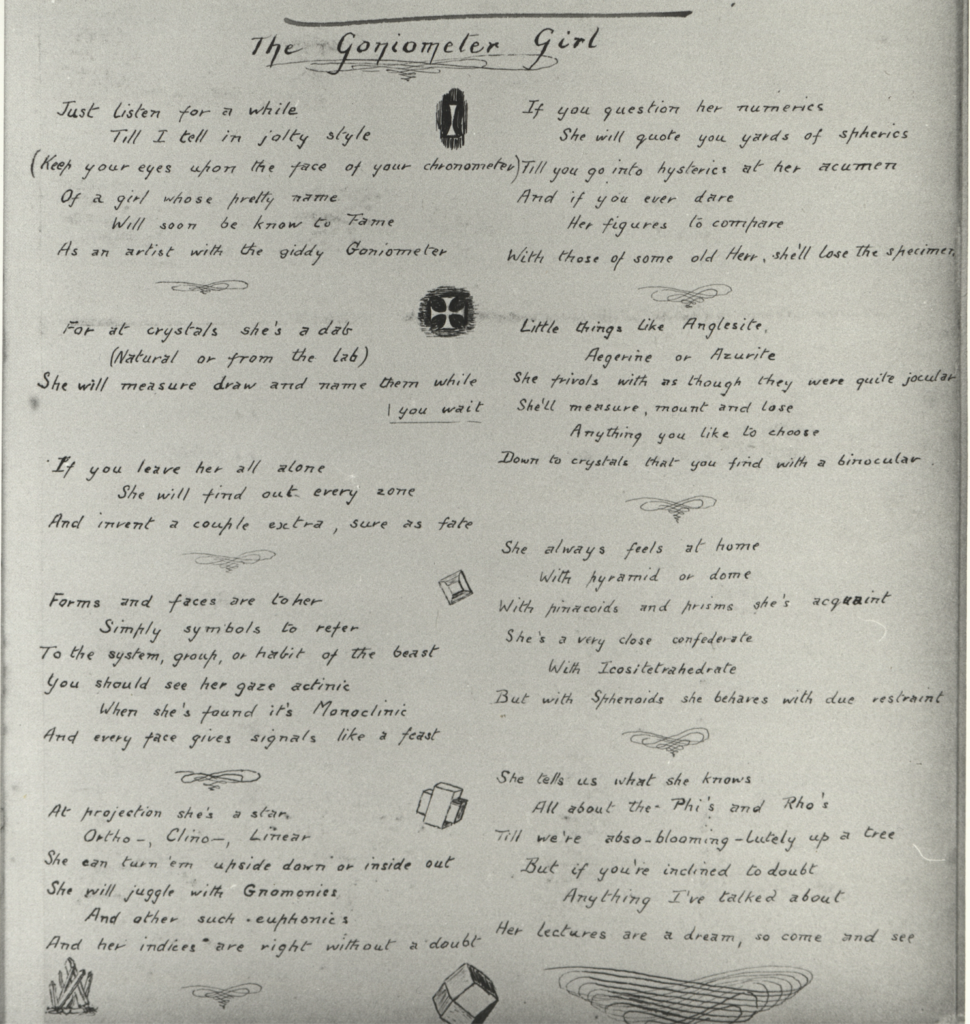
A very flattering geological poem by Deb (or at the very least in his handwriting with his illustrations) about Fanny and her area of expertise.
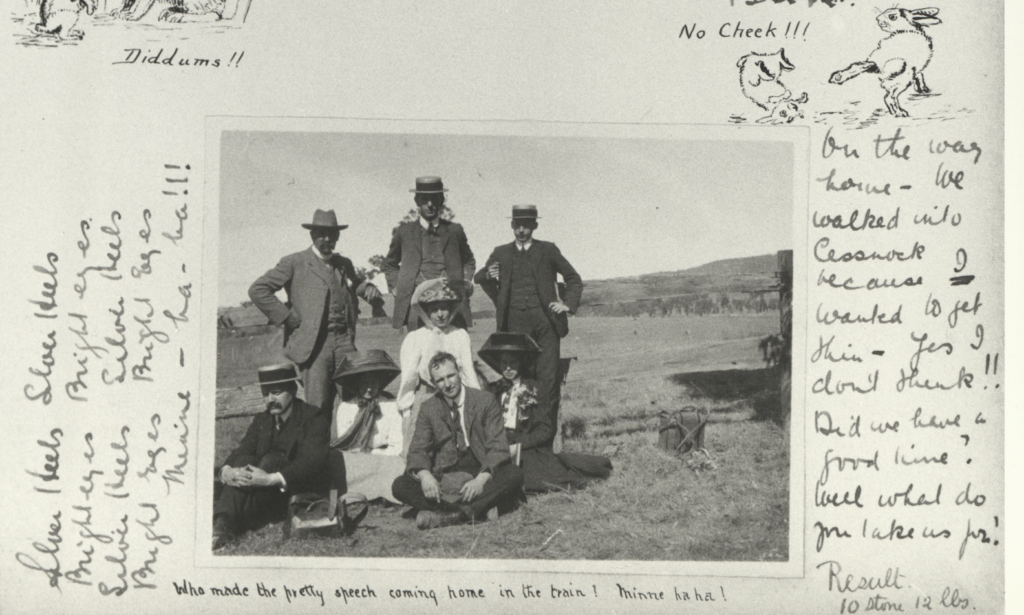
Bottom caption in Deb’s handwriting
On the right, Fanny poking fun at her own weight — must have been hard to be a busty Jewess back in those days, I should count my blessings
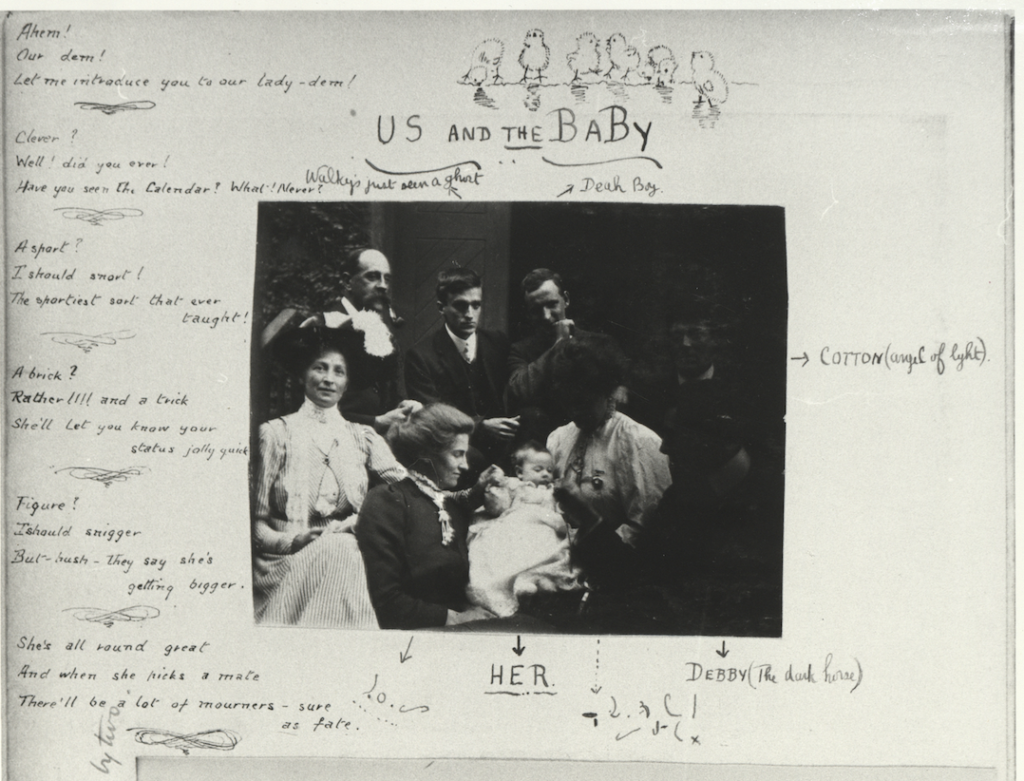
Another “lady dem” poem by Deb with mocking references to Fanny’s weight.
The shorthand pointing to Catherine says “She is the one” and pointing to Fanny says “Good isn’t the word for it, we don’t think” — unclear who wrote that, maybe Priestley
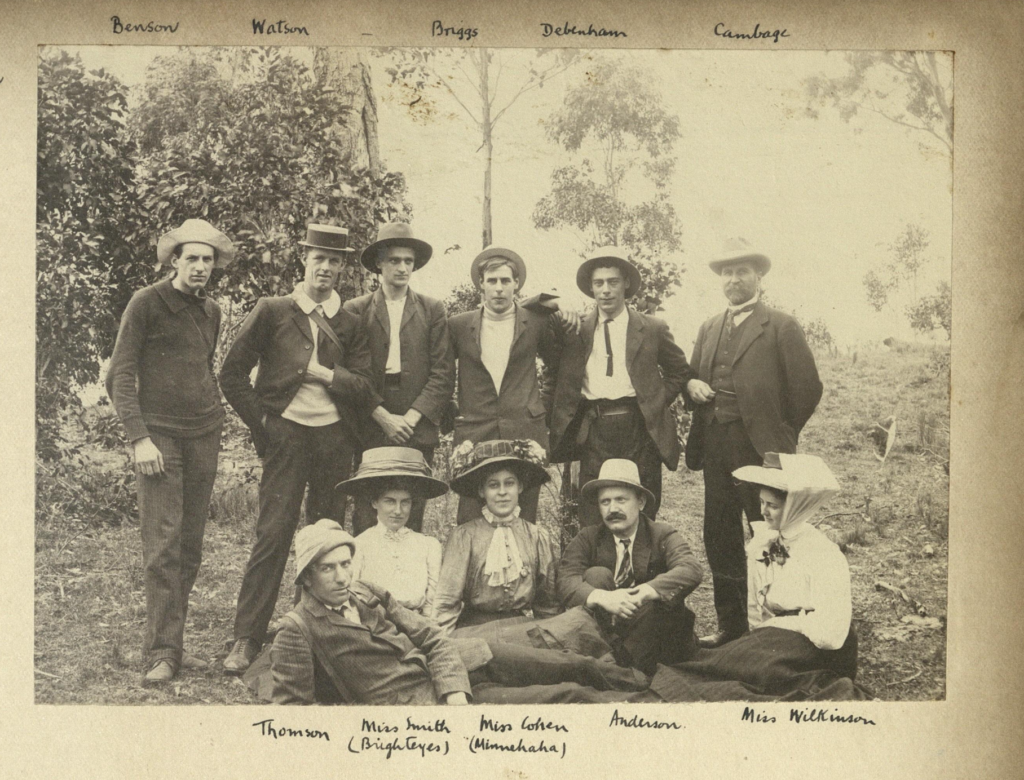
The grad/post-grad clique

The collaborative nature of the scrapbook labeled as Fanny’s is revealed by Priestley and Deb’s handwriting appearing amongs the entries (“I object to being called a local bullock team” — Priestley)
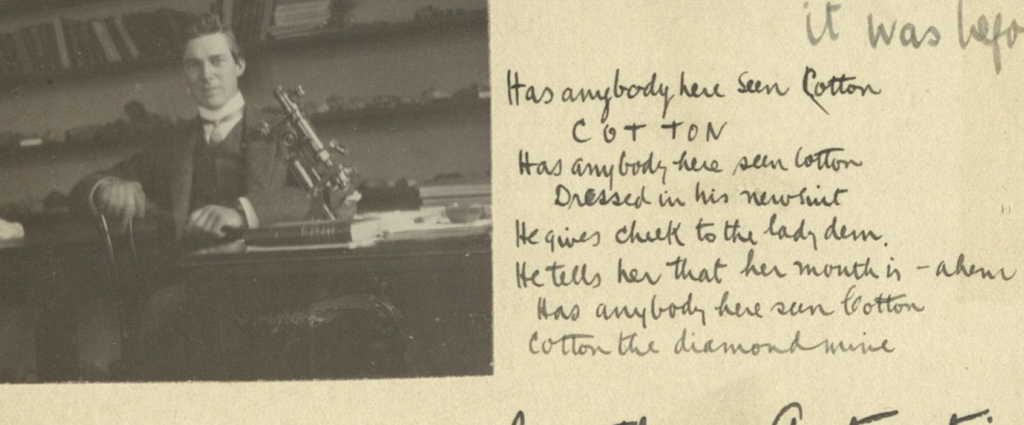
Leo Cotton, a Sydney geologist who had traveled on the Nimrod but not as part of the shore party, was not at the Pokolbin camp but was given a look in in the scrapbooks as someone who “gives cheek to the lady dem” aka Fanny.
So—in conclusion—Debenham, Cotton, and the married Thomson seemed to all demonstrate interest in Fanny.
Learning about this extremely grad-school-coded situation helped shed some light on a very mysterious reference I had come across much earlier, in Griff Taylor’s midwinter diary of 1911. He wrote:
Deb always uses Dorothy’s flag. Tho I knew he had another. But it is much larger than the others and more personal – so he has not exhibited it before. Union Jack & Shields as in D’s effort But blue of brighter colors – which is not really so correct. Also ice on 2 skis, tho’ Charlie called it Skull & Crossbones. His Birthday and initials. I noticed an extra C in the latter & can shrewdly guess who made the flag – (which is well sewn) – but I lied nobly in support of his hint that C meant Cleveland – a family name [“true” added in red pencil above Cleveland]. (He wrote his name F C Deb on my Menu Q.V.)
Griff had met Fanny during the short period when he was in Australia, after coming back from Cambridge but before departing for the expedition—he is pictured in this 1910 group portrait of Professor David’s geology graduate students, right next to Fanny and Priestley, with Deb and Catherine Smith on the other side of the table.
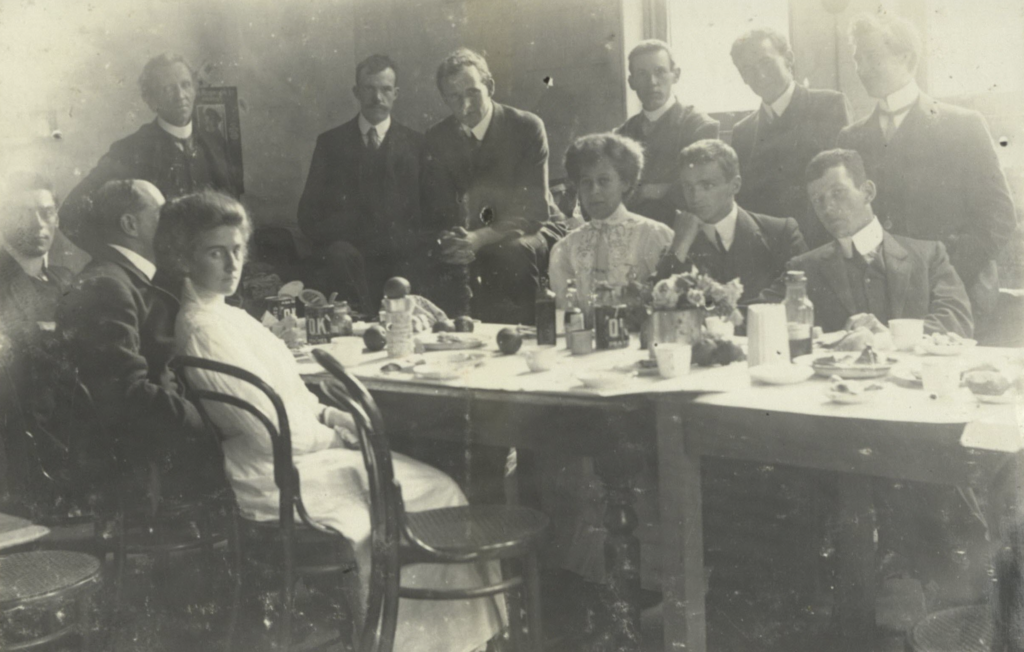
If that picture was taken in early September 1910 after the eventful camp at Pokolbin, the ever-observant Griff might well have been privy to Deb’s continued attempts at flirting with Fanny. It seems like the “F.C.D.” on the flag twigged to him as some kind of sneaky reference to “Fanny Cohen (Debenham)” and I can only imagine how red Deb’s face got at the insinuation and Griff’s repeated refusal to believe that C stood for Cleveland, his middle name—which it really was. (It’s unclear if Fanny did actually make the flag for him—my guess is that she didn’t. It was probably his mother?!)
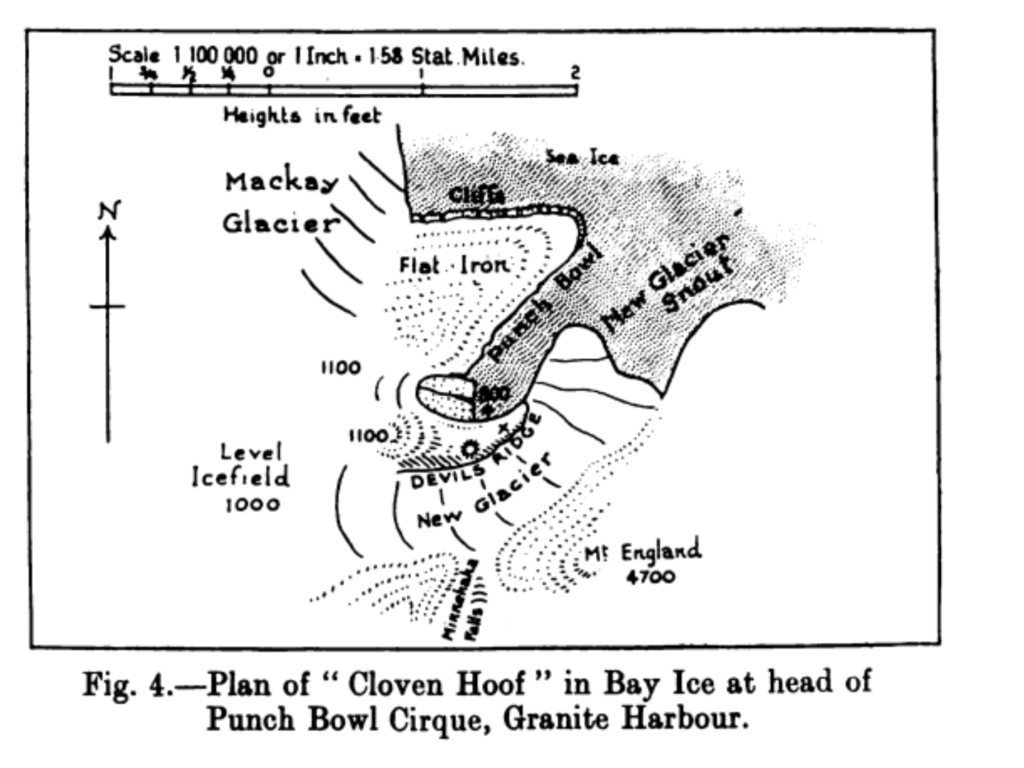
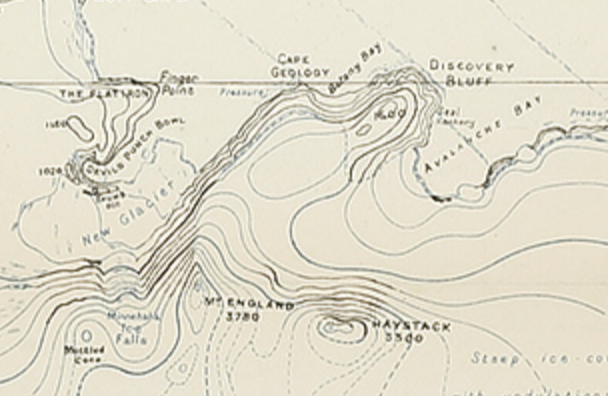
There is another reference illuminated by the Deb-Fanny relationship which I may well be the first person to discover since it was put down in the historical record. I was revisiting the narrative of the 1911 Second Western Journey and realizing Debenham and Taylor named glaciers and mountains and geological features in the Granite Harbour region after lots of people they knew, including a Mt. Allan Thomson. If there was a mountain named after Thomson, then perhaps…?
Into the SCAR Composite Gazetteer of Antarctica I typed “fanny cohen” — no dice. “Cohen” results were unrelated. But what about “Minnehaha” ?
The Minnehaha Icefalls. A small, heavily crevassed icefall descending the steep west slopes of Mount England and forming a southern tributary to New Glacier, close west of its terminus at Granite Harbor, Victoria Land. Charted and named by a party of the BrAE (1910-13) led by Taylor. The name was suggested by Frank Debenham.
Ding ding ding!
No notes were left as to why Debenham had suggested such an odd name—but I knew!!!! The ice-falls in question were quite close to their base camp at Cape Geology and Deb was responsible for surveying the area with his plane table. I wonder if he had had the nerve to suggest the name to Griff for inclusion in the final maps or if he just went ahead and chose it of his own volition. If he’d suggested it to Griff, there’s no reason Griff would have known who it referred to, as he wasn’t at the camp. Deb might have made up a silly excuse or story to evade Griff’s suspicion… but either way, thanks to his choice, Fanny Cohen—who was never even under consideration to replace Thomson, despite her academic and geological bona fides being far beyond Priestley’s or Debenham’s—was immortalized in the Antarctic landscape forever.
Debenham and Priestley and the rest of the men at Pokolbin went on to great adventures, grand careers—even poor tubercular Thomson.
But what happened to Fanny?
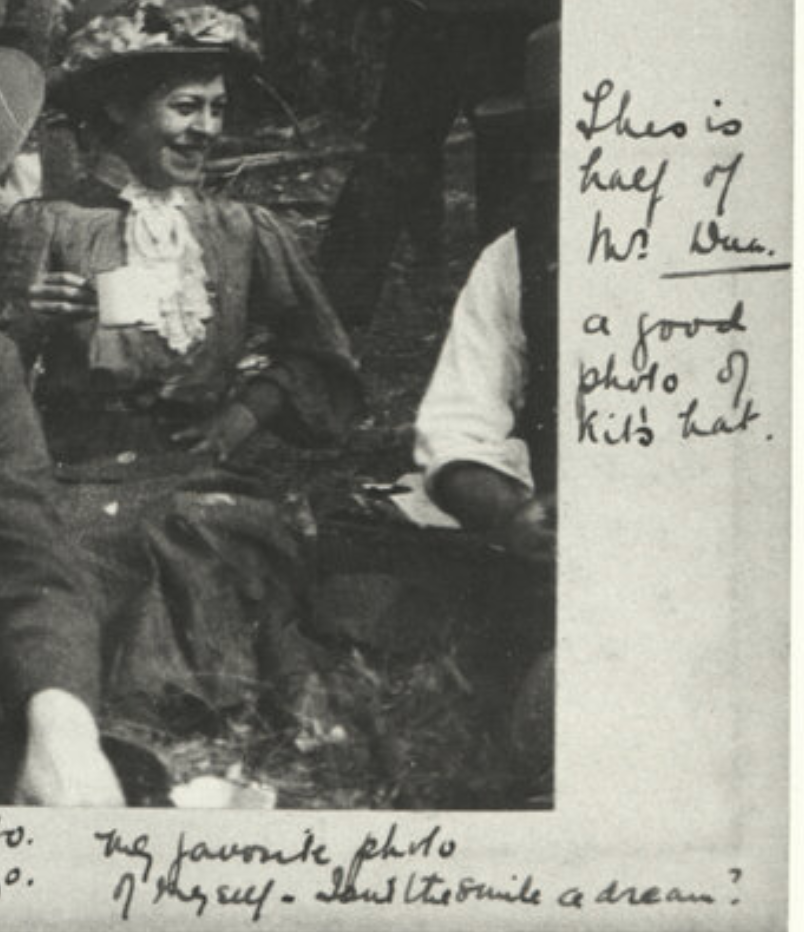
My favorite photo of myself – Isn’t the smile a dream?
In addition to her University Medal for Geology and her John Coutts scholarship for mathematical studies in optical and physical crystallography, she was the first woman to be awarded the prestigious Barker graduate scholarship in mathematics and was able to travel to Cambridge to continue her study of mathematics in 1911.
But as an unmarried woman she had to be accompanied by a chaperone: in this case her mother, who became ill less than a year later and Fanny had to unceremoniously depart Cambridge, cutting her studies short, in order to go home to Sydney with her mother. She completed her studies back at the University of Sydney and graduated M.A. in 1913 with a thesis titled ‘The application of spherical trigonometry to crystallography’.
Before graduating she had already begun her career in teaching. She became assistant mistress of mathematics at Fort Street Girls’ High School when she returned from England in 1912, and left in 1922 after some years as mathematics mistress. In the mid 1920s she was deputy headmistress and then headmistress of various other girl’s schools in the area and returned to Fort Street as headmistress there in 1930, in which position she remained until retirement in 1952, enforced by reason of her age.
One former student remembered on the occasion of her retirement: “I can recall sitting in her class, lost in admiration at the speed of her reasoning and the lightning nature of her calculations. Her lessons always made me think of a broad, swiftly-moving stream. There was never any leisurely strolling as we followed her in search of mathematical wisdom; we were swept along in a most stimulating and exhilarating fashion; how very enjoyable it all was!”
She never married. She was known universally as a kind, thoughtful, imposing, able, attentive, dignified, and charming woman with an infectious laugh. After retirement she worked for the Australian government in London for a time and was a prolific translator of books into Braille. She was awarded the OBE in 1962 for services to education.
According to the Sydney Jewish Times,“At a time when many vocations were closed to girls, either officially or by public tradition, she expressed her ‘unswerving belief that girls of sufficient ability were capable of reaching the same high academic standard as boys and of entering the professions on an equal footing’” and “she was known as a ‘champion in the fight for equality of opportunity in the 1940s and 1950s.’” She was described by Smith’s Weekly in 1949 as a “dominant personality of one of the dominant schools of the Commonwealth.”
During her career in education she also served as the first female fellow of the Senate of the University of Sydney and was very prominent in the social life of the city.
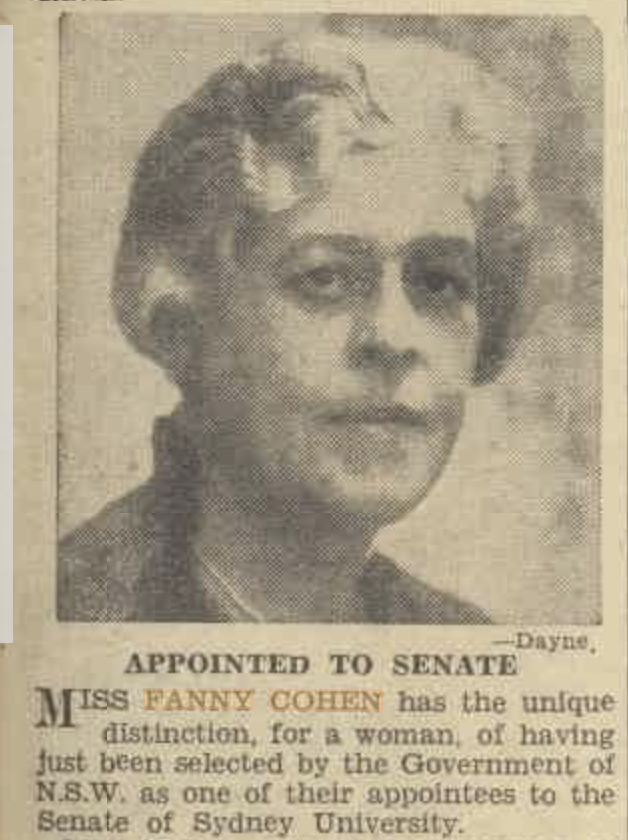
December 1934 (Source: Trove)

February 1954 (Source: Trove)
She had an immense impact on the lives of hundreds of girls who came through Fort Street, but after such a promising start at university, it seems a shame that she did not go on to the kind of notable academic and scientific career that her peers such as Debenham, Priestley, Walkom, Burrows, Briggs, Benson, Dun, and Thomson enjoyed. As Claire Hooker wrote in Irresistible forces: Australian women in science, “Men could climb the career ladder; women were more or less limited to the bottom rungs.” Catherine “Bright Eyes” Smith married Leo Cotton’s brother and disappeared from the academic world entirely; Watson, however, also ended up as a headmaster.
Fanny stayed in touch with her old university friends. Raymond Priestley’s diary, kept when he was vice-chancellor of Melbourne University in the 1930s, documents a meeting between himself, Deb, and Fanny during which they reminisced about old times.
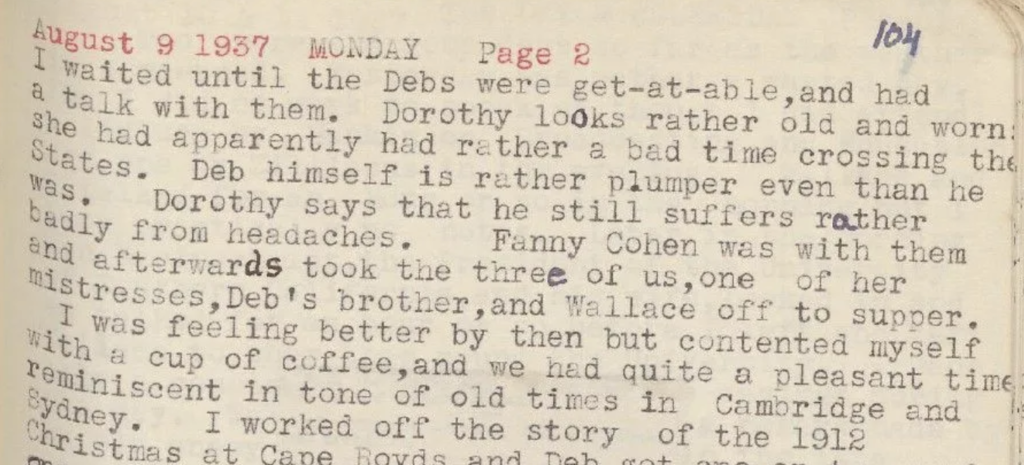
Presumably “one of her mistresses” in this context means one of the teachers in her employ, lol.
She passed away at the grand old age of 88 in 1975 and left her sizable estate to a niece. She is remembered today at Fort Street Girl’s School by a portrait and a Fanny Cohen Gymnasium, opened in 1952 before she retired.
Sadly I have not been able to track down much archival material beyond what is held at Sydney and the State Library of New South Wales. Even the albums at Sydney are only copies of originals scanned in 1975, which are either still held by the family or lost.
My dream would be to track down correspondence between her and any of the Antarctics, or anything that shows that she knew of the Minnehaha Icefalls named in her honor by Debenham.
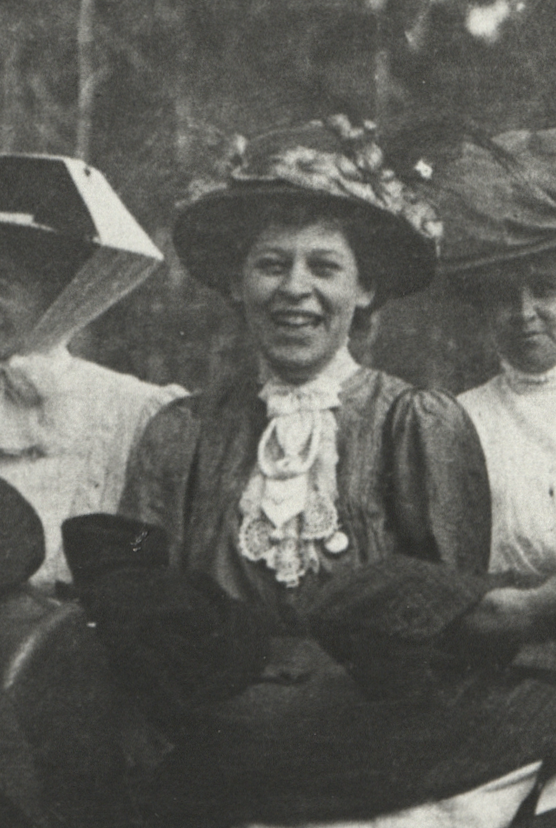
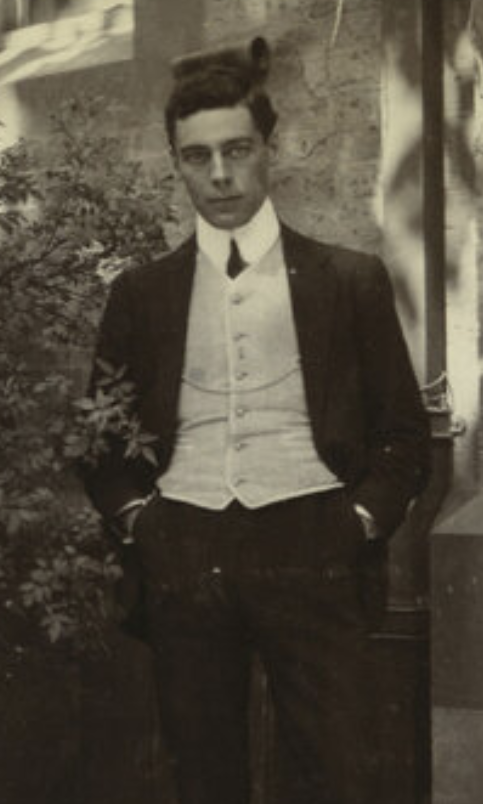
Missed connections: by the time Deb got to Cambridge in 1913 to work up the results of the Terra Nova expedition, Fanny had gone home to Sydney where she remained during the war.
Leave a Reply